CIVIL SOCIETY
NIGERIA, EUROPEAN UNION FINALISE READMISSION AGREEMENT, STRENGTHEN COOPERATION ON MIGRATION MANAGEMENT

MINISTRY OF INTERIOR
PRESS RELEASE
10th November, 2026
NIGERIA, EUROPEAN UNION FINALISE READMISSION AGREEMENT, STRENGTHEN COOPERATION ON MIGRATION MANAGEMENT
Federal Government has reaffirmed its commitment to responsible migration management, describing the finalisation of the Readmission Agreement between Nigeria and the European Union (EU) as an important step towards strengthening bilateral relations and addressing irregular migration.
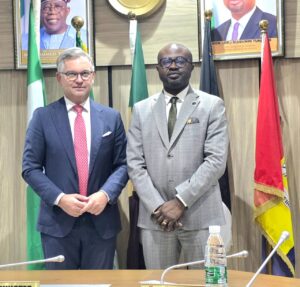
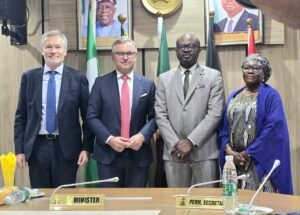
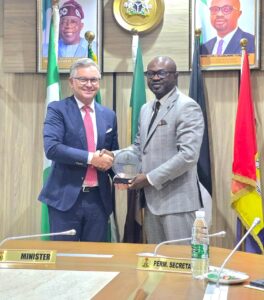
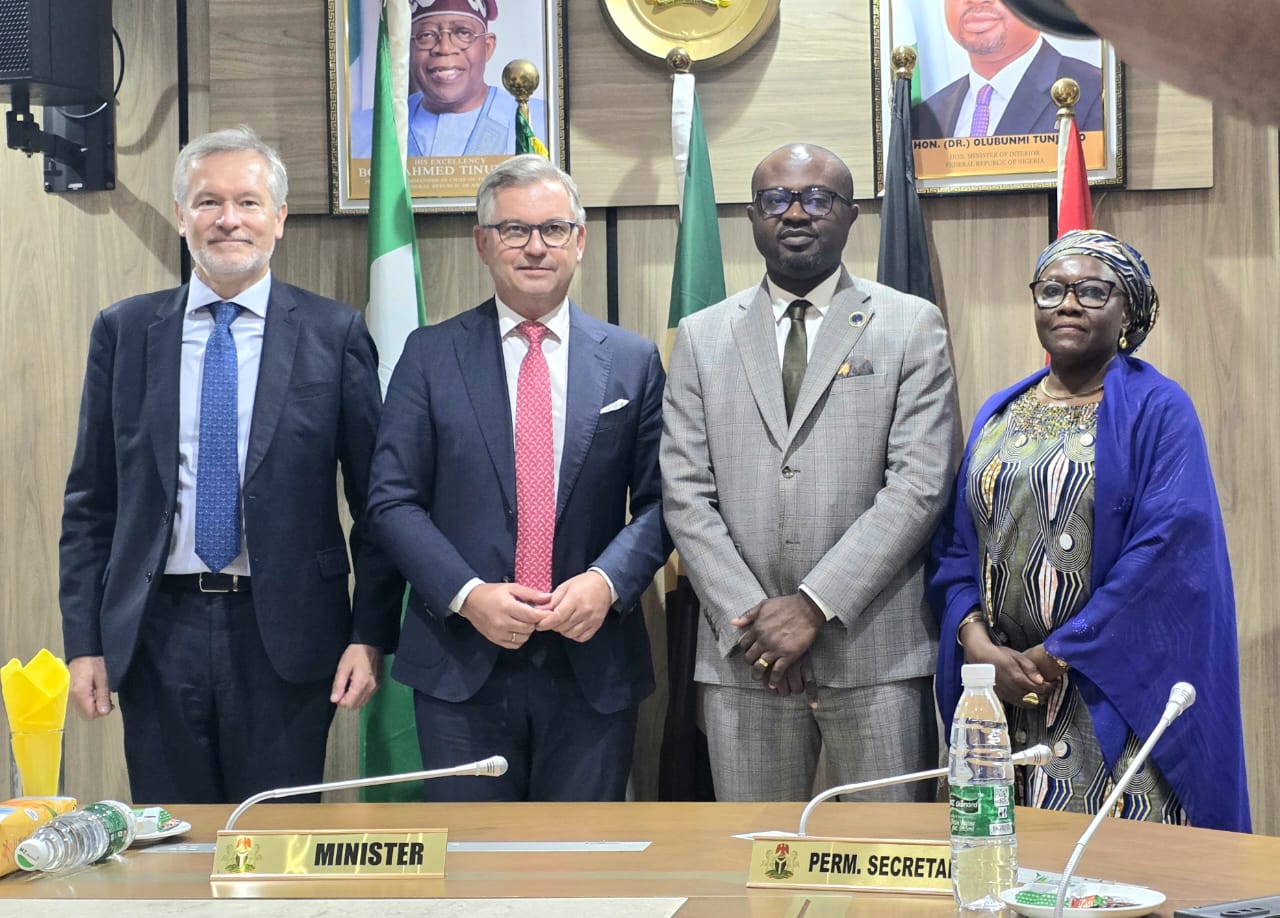
The Honourable Minister of Interior, Dr. Olubunmi Tunji-Ojo stated this today during a meeting with the EU Commissioner for Internal Affairs and Migration, Mr. Magnus Brunner, and his delegation, ahead of the formal signing of the agreement which brings to a close negotiations that have lasted for about a decade at the Ministry of Interior.
Dr. Tunji-Ojo described the agreement as significant, not only for its role in facilitating the return of Nigerians without legal grounds to remain in EU member states, but also for promoting a more orderly, dignified and mutually beneficial migration management system. He assured the EU delegation that Nigeria would honour every provision of the agreement, stressing that the government’s position on irregular migration was clear. According to him, Nigeria does not encourage illegal migration or any abuse of the trust established between countries.
The Minister emphasised that building mutual trust should come before discussions on easing migration procedures, noting that improved confidence between Nigeria and its international partners would create better conditions for legal migration and cooperation. He highlighted the Federal Government’s efforts to modernise Nigeria’s migration and border management systems through automation and the integration of identity databases. He explained that the initiative would enable relevant authorities to verify the nationality of persons being returned to Nigeria more quickly and accurately.
Dr. Tunji-Ojo identified three categories of persons who may be subject to readmission: those with valid Nigerian travel documents, those who travelled with documents but subsequently lost or destroyed them, and those who travelled without any form of identification. He noted that the government was developing systems to ensure that the identities of such persons could be established through available national records. The Minister also disclosed that Nigeria had made significant progress in automating its migration processes, adding that more than 17 billion migration records had been migrated into the integrated system. He noted that similar arrangements were already being implemented with the United Kingdom, while discussions were ongoing with the United States to replicate the system.
On border security, the Minister called for stronger international collaboration and real-time information sharing, particularly in tackling human trafficking, migrant smuggling and other cross-border crimes. He stressed that these challenges could not be effectively addressed by individual countries acting alone. He further disclosed that the Federal Government had recorded progress in correctional service reforms, stating that the number of repeat offenders had reduced from approximately 13,000 in 2023 to about 1,600 in the previous year.
In his remarks, the EU Commissioner for Internal Affairs and Migration, Mr. Magnus Brunner, described the finalisation of the agreement as a significant development in Nigeria-EU relations, noting that it could provide a foundation for further cooperation in other areas. Brunner commended Nigeria’s efforts in modernising its border security architecture and expressed the EU’s readiness to deepen collaboration through its border management agency. He also identified police cooperation, the fight against human trafficking and migrant smuggling, and the creation of legal migration pathways as areas requiring sustained engagement. He disclosed that approximately 260,000 Nigerians were legally resident in the European Union, stressing the importance of expanding opportunities for safe and regular migration.
Also speaking, one of the delegation, Jonannes Lucher acknowledged that negotiations had not been easy, explaining that Nigeria had sought to include other areas of cooperation, including anti-trafficking, anti-drug trafficking and legal migration pathways, in the agreement. He, however, assured that discussions on these additional areas would commence following the conclusion of the readmission agreement. He further disclosed that the EU had made available almost €100 million in additional funding to support broader cooperation, with discussions scheduled to begin with Nigerian migration and security officials.
The meeting ended with both sides expressing their commitment to strengthening cooperation, building mutual trust and developing practical solutions to shared migration and security challenges.
E-Signed
Mrs Mary Ali, anipr
Head of Press and Public Relations
Ministry of Interior