HUMANITARIAN
Africa CRVS Day 2026: Nigeria Accelerates Efforts to Ensure Every Child Has a Legal Identity

Press Release
Africa CRVS Day 2026: Nigeria Accelerates Efforts to Ensure Every Child Has a Legal Identity
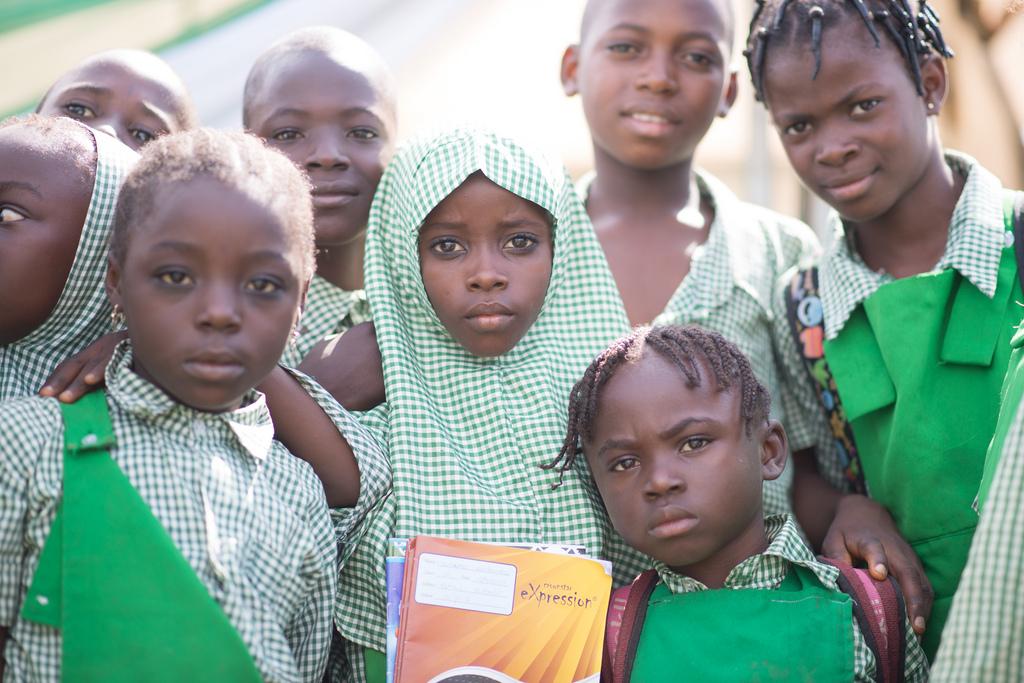
Abuja, 10 August 2026 – Nigeria has reaffirmed its commitment to ensuring that every child is registered at birth and recognized before the law as the country joins the rest of the continent to commemorate Africa Civil Registration and Vital Statistics (CRVS) Day 2026.
Observed under the theme, “New CRVS Decade (2026-2036): Consolidating the gains of the Africa Programme on Accelerated Improvement of Civil Registration and Vital Statistics (APAI-CRVS) and securing the future of Civil Registration and Vital Statistics in Africa through integration, decentralization and digitalization,” this year’s commemoration highlights the critical role of legal identity in protecting children’s rights and strengthening national development.
Birth registration is a child’s first legal recognition by the state. It provides proof of identity and lays the foundation for access to healthcare, education, social protection, and legal protection throughout life. It also generates vital data that supports planning and service delivery.
Nigeria continues to strengthen its Civil Registration and Vital Statistics (CRVS) system through collaboration among the National Population Commission (NPC), the National Identity Management Commission (NIMC), Association of Local Governments of Nigeria (ALGON), development partners, and communities. According to NPC administrative data, digital birth registration services are now available in more than 6,000 of Nigeria’s 8,809 wards, while targeted registration efforts have reached more than 14.5 million children, including those living in rural, hard-to-reach and humanitarian settings.
Across states such as Bayelsa, Gombe, Jigawa, Taraba, Kebbi, Niger, and Zamfara, registration services are increasingly being linked with health facilities and community outreach initiatives, bringing services closer to families and helping ensure more children are registered closer to the point of birth.
“Every registered birth strengthens the foundation for child protection and national development,” said Dr. Aminu Yusuf (Talban Wushishi), Chairman of the National Population Commission (NPC). “Our priority is to ensure that every child, regardless of where they are born, is counted, protected and recognized before the law.”
As Nigeria advances its legal identity agenda, digitalization and stronger integration between civil registration and identity management systems are improving the efficiency, accessibility, and reliability of registration services.
According to Engr. (Dr.) Abisoye Coker-Odusote, Director-General and Chief Executive Officer of NIMC, “integrated digital identity systems create a seamless pathway for individuals from birth through adulthood, while improving access to services and strengthening governance.”
Local governments continue to play a critical role in expanding access to registration services and raising awareness at community level.
“Decentralization is essential to ensuring that children in remote and underserved communities are not left behind,” stated Hon. (Engr.) Bello Lawal, National President of the Association of Local Governments of Nigeria (ALGON). “Bringing services closer to families increases access and encourages timely registration.”
The importance of sustained political commitment was emphasized by Hon. Okunjimi John Odimayo, Chairman of the House Committee on the National Population Commission, who noted that “strong civil registration and vital statistics systems support better planning, more effective service delivery and improved development outcomes for all Nigerians.”
Despite progress, significant challenges remain across the continent. Current estimates indicate that only about half of children under five in sub-Saharan Africa are registered at birth, with the region accounting for the largest share of unregistered children globally.
For UNICEF, strengthening birth registration systems remains fundamental to realizing children’s rights and ensuring no child is invisible.
“Birth registration is far more than a certificate. It is a gateway to protection, services, and opportunity,” said Wafaa Saeed Abdelatef, UNICEF Representative in Nigeria. “UNICEF will continue working with the Government of Nigeria and partners to strengthen integrated, decentralized and digitalized systems that ensure every child is counted, protected and able to access their rights.”
As Africa enters a new decade of CRVS systems strengthening, Nigeria remains committed to expanding access to birth registration, improving vital statistics, and ensuring that every child has a legal identity from birth.
###
For media information, please contact:
NPC; Stanley Nwosu, stanleynwosu.npc@gmail.com 2348061207153
NIMC: Dr. Kayode Adegoke, kayode.adegoke@nimc.gov.ng 2348029665275
ALGON: Obiora Orji, obioraorji.oo@gmail.com 2348151111300
UNICEF Nigeria: Sussan Akila, Communication Specialist sakila@unicef.org 2348036577670
Best regards,
Susan Akila
Communication and Advocacy Specialist | Communications, Advocacy and Partnerships
United Nations Children’s Fund | UN House, Plot 617/618,
Diplomatic Drive, Central Business District, PMB 2851, Garki,
Abuja Nigeria
Email: sakila@unicef.org
Follow us on Facebook, Twitter, Instagram, YouTube, unicef.org/nigeria/