DEVELOPMENT
Global Experts Call for Community-Led Development, New Funding Models at World’s Largest SBCC Summit

PRESS RELEASE
Global Experts Call for Community-Led Development, New Funding Models at World’s Largest SBCC Summit
Delegates at the 2026 International Social and Behaviour Change Communication (SBCC) Summit have called for a fundamental shift in global development, urging governments, donors and development partners to embrace community-led solutions, diversify funding sources and build trust as the cornerstone of sustainable social change.
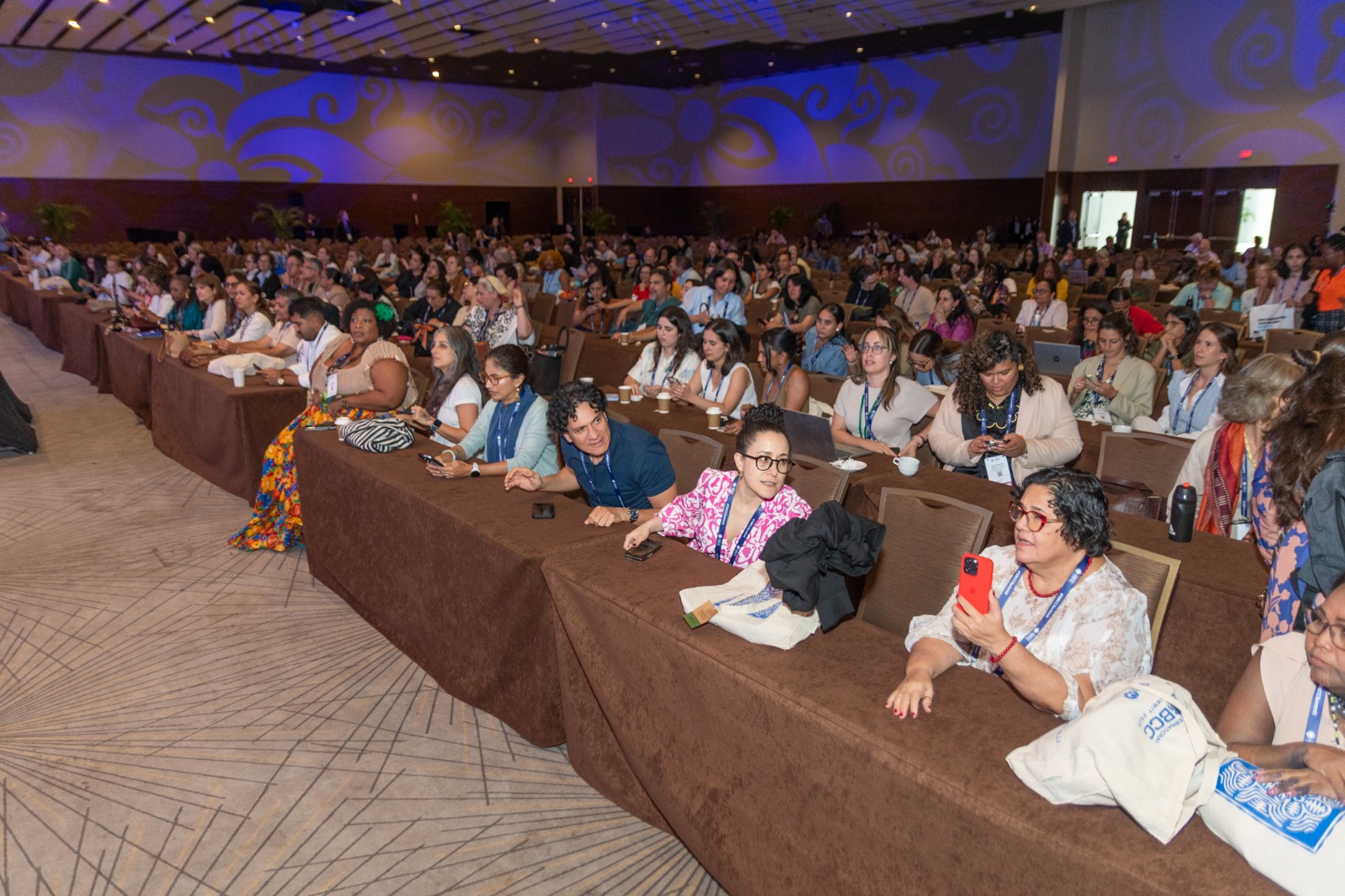
The resolutions emerged at the end of the world’s largest gathering on social and behaviour change communication, held in Panama City from June 22 to 26 2026, with the theme, ‘The Power of Connection: Reimagining Knowledge, Action and Equity in a Changing SBCC Landscape,’ where experts from 125 countries examined how communication can address global challenges, including public health, climate change, governance and inequality.
A major outcome of the summit was a consensus that development programmes should move away from externally driven interventions and instead empower communities to design, implement and evaluate solutions rooted in local knowledge, lived experiences and cultural identity.
Participants also called for a complete rethink of how social and behaviour change programmes are financed, advocating stronger domestic investment, greater private-sector participation and closer collaboration among governments, civil society organisations, academic institutions and philanthropic bodies in response to declining donor funding.
Delegates identified trust as one of the world’s most valuable development assets, stressing that communication must go beyond simply disseminating information to fostering dialogue, transparency and stronger relationships with communities.
Artificial intelligence also featured prominently in discussions, with participants agreeing that while AI has the potential to transform audience research, programme design, monitoring and content creation, its deployment must remain ethical, inclusive and centred on human needs.
The summit further reaffirmed the importance of giving greater prominence to historically underrepresented voices, including Indigenous communities, young leaders and practitioners from low- and middle-income countries, in shaping global development policies and knowledge.
The event was co-chaired by the Centre for Communication and Social Impact and the Johns Hopkins Center for Communication Programmes alongside global partners.
As co-chair, CCSI led several technical sessions, moderated panel discussions and presented evidence from programmes across Africa on strategic communication, health systems, governance, nutrition, gender, artificial intelligence and community engagement.
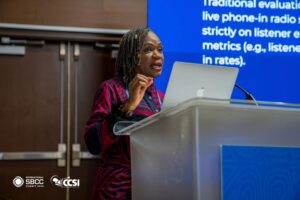
Among the highlights was the introduction of the PEBIC Evaluation Criteria, a proprietary framework presented by CCSI Executive Director, Babafunke Fagbemi, to assess the quality of responses provided by radio programme resource persons and improve radio’s effectiveness as a platform for social and behaviour change communication.
Welcoming delegates, CCSI Executive Director and Summit Co-chair, Babafunke Fagbemi, said the turnout demonstrated the world’s continued belief in the power of communication to transform lives despite shrinking development funding.
The summit received about 1,970 abstracts submitted across seven presentation formats. Africa accounted for 36 per cent of participants, while youth and emerging leaders made up 25 per cent of attendees.
She said the growing diversity of participants reflects the future direction of the field.
“These numbers tell an important story. They remind us that the future of social and behavior change is increasingly global, increasingly diverse, and increasingly shaped by voices that have too often been underrepresented,” she said.
“Your presence here in Panama is itself a powerful statement. It is a statement that we continue to believe in the power of communication, community, and collective action to improve lives,” Fagbemi said.
She, however, noted that changing global priorities have made it more difficult to sustain investments in social and behaviour change programmes, even as their importance in promoting public health, equity and resilience continues to grow.
Executive Director of the Center for Communication Programs at Johns Hopkins University and co-chair of the Summit, Débora López, stressed that the summit has become even more relevant in an era characterised by misinformation, declining public trust and rapidly evolving technologies.
“Connection is at the heart of social and behavior change. It is also at the heart of this Summit,” López said, adding that collaboration has become indispensable as the world grapples with conflict, climate change, artificial intelligence and misinformation.
Throughout the week-long event, delegates deliberated on artificial intelligence, trust and misinformation, indigenous knowledge systems, participatory research, youth leadership, climate resilience and stronger health systems.
The four-day summit concluded with delegates reaffirming that lasting social change will depend on locally led solutions, innovation, strong partnerships and communication strategies that place people at the centre of development, while strengthening collaboration among governments, academia, civil society and development partners.