CIVIL SOCIETY
NEMA CONVENES NATIONAL EMERGENCY COORDINATION FORUM TO REVIEW FLOOD RESPONSE AND STRENGTHEN PREPAREDNESS AGAINST EL NIÑO


NEMA CONVENES NATIONAL EMERGENCY COORDINATION FORUM TO REVIEW FLOOD RESPONSE AND STRENGTHEN PREPAREDNESS AGAINST EL NIÑO
The National Emergency Management Agency (NEMA) has convened the National Emergency Coordination Forum (NECF) to review ongoing flood response efforts across Nigeria, strengthen inter-agency coordination and harmonise preparedness measures ahead of the anticipated 2026/2027 El Niño phenomenon.
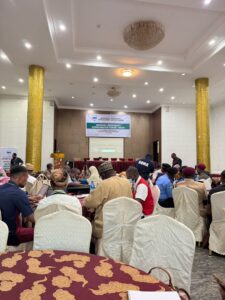
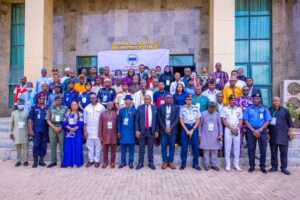
The meeting, held on Thursday, 22 October 2026, at Ajuji Greenwich Hotel, Abuja, brought together key stakeholders from Ministries, Departments and Agencies (MDAs), security institutions, humanitarian organisations and development partners to assess emerging disaster risks and strengthen coordinated preparedness and response.
Speaking at the forum, the Director-General of NEMA, Mrs. Zubaida Umar, disclosed that the Agency’s flood dashboard had recorded 673,350 persons affected across 134 Local Government Areas in 28 states as of 20 October 2026. Of this number, 214,997 persons had been displaced, while 245 lives had been lost.
Represented by the Director of Planning, Research and Forecasting, Dr. Godwin Topikor, the Director-General said the magnitude of the flooding underscored the urgent need to review ongoing interventions, identify response gaps and strengthen collaboration among stakeholders to address the humanitarian needs of affected communities.
She emphasised the importance of heightened surveillance, timely information sharing and coordinated preparedness against emerging public health threats, particularly in disaster-affected communities where displacement, poor sanitation and limited access to essential services could heighten health vulnerabilities.
On the anticipated 2026/2027 El Niño phenomenon, Mrs. Zubaida Umar stressed the need for relevant institutions to harmonise climate forecasts, assess potential risks and translate early warning information into practical anticipatory actions to minimise possible impacts on lives, livelihoods and critical infrastructure.
She reiterated that effective disaster management required a proactive, multisectoral approach anchored on early warning, preparedness, risk reduction, timely response and sustainable recovery.
The Director-General urged participating institutions to deepen operational collaboration, eliminate duplication of efforts and prioritise the protection of vulnerable populations, particularly women, children, older persons and persons with disabilities.
The forum featured technical presentations and discussions on the current flood situation and cholera updates, the anticipated El Niño phenomenon and its hydrological implications, as well as global and regional climate outlooks.
Participants also reviewed sectoral preparedness and response priorities covering food security, health, education, water, sanitation and hygiene, nutrition, protection, emergency shelter, logistics, security and information management.
In his welcome address, the Deputy Director of Planning, Research and Forecasting, Mr. Tony Ephraim, underscored the importance of effective coordination and collaboration among emergency management stakeholders. He encouraged participants to make meaningful contributions towards identifying operational gaps, improving information sharing and developing actionable recommendations to strengthen national disaster preparedness and response.
The meeting attracted representatives of key institutions, including the Federal Ministries of Health and Social Welfare, Environment, Information and National Orientation, and Education; the Armed Forces of Nigeria; Nigeria Police Force; Nigeria Security and Civil Defence Corps (NSCDC); Nigeria Hydrological Services Agency (NIHSA); Nigerian Meteorological Agency (NiMet); Nigeria Centre for Disease Control (NCDC); Federal Road Safety Corp (FRSC), Federal Fire Service (FFS), Nigerian Red Cross Society (NRCS); Society for Family Health (SFH); World Meteorological Organization (WMO); and other humanitarian and development partners.
The forum provided a platform for stakeholders to review existing response mechanisms, harmonise sectoral priorities and strengthen collective readiness to address ongoing emergencies and anticipated disaster risks across the country.
22 October 2026