FINANCE AND ECONOMY
𝑨𝒈𝒓𝒆𝒆𝒎𝒆𝒏𝒕 𝒇𝒐𝒓𝒎𝒂𝒍𝒊𝒔𝒆𝒔 𝒅𝒂𝒕𝒂-𝒔𝒉𝒂𝒓𝒊𝒏𝒈 𝒂𝒏𝒅 𝒂𝒍𝒊𝒈𝒏𝒆𝒅 𝒎𝒂𝒄𝒓𝒐𝒆𝒄𝒐𝒏𝒐𝒎𝒊𝒄 𝒂𝒔𝒔𝒖𝒎𝒑𝒕𝒊𝒐𝒏𝒔, 𝒔𝒆𝒕𝒔 𝒐𝒖𝒕 𝒂 𝒋𝒐𝒊𝒏𝒕 𝒂𝒑𝒑𝒓𝒐𝒂𝒄𝒉 𝒕𝒐 𝒊𝒏𝒇𝒍𝒂𝒕𝒊𝒐𝒏, 𝒂𝒏𝒅 𝒑𝒓𝒆𝒔𝒆𝒓𝒗𝒆𝒔 𝒕𝒉𝒆 𝑪𝒆𝒏𝒕𝒓𝒂𝒍 𝑩𝒂𝒏𝒌’𝒔 𝒐𝒑𝒆𝒓𝒂𝒕𝒊𝒐𝒏𝒂𝒍 𝒊𝒏𝒅𝒆𝒑𝒆𝒏𝒅𝒆𝒏𝒄𝒆

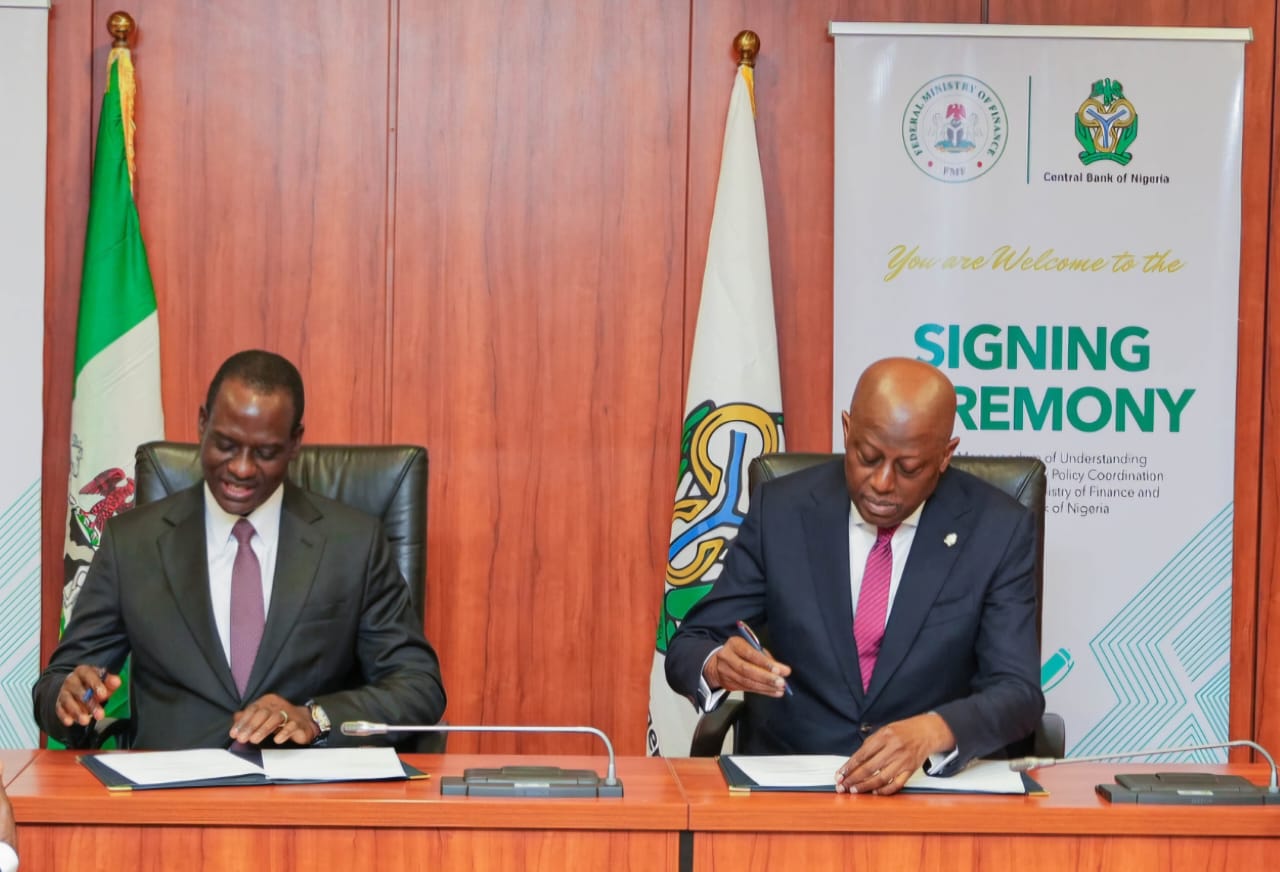
𝐅𝐞𝐝𝐞𝐫𝐚𝐥 𝐌𝐢𝐧𝐢𝐬𝐭𝐫𝐲 𝐨𝐟 𝐅𝐢𝐧𝐚𝐧𝐜𝐞 𝐚𝐧𝐝 𝐂𝐞𝐧𝐭𝐫𝐚𝐥 𝐁𝐚𝐧𝐤 𝐨𝐟 𝐍𝐢𝐠𝐞𝐫𝐢𝐚 𝐒𝐢𝐠𝐧 𝐌𝐨𝐔 𝐭𝐨 𝐈𝐧𝐬𝐭𝐢𝐭𝐮𝐭𝐢𝐨𝐧𝐚𝐥𝐢𝐬𝐞 𝐅𝐢𝐬𝐜𝐚𝐥-𝐌𝐨𝐧𝐞𝐭𝐚𝐫𝐲 𝐏𝐨𝐥𝐢𝐜𝐲 𝐂𝐨𝐨𝐫𝐝𝐢𝐧𝐚𝐭𝐢𝐨𝐧
𝑨𝒈𝒓𝒆𝒆𝒎𝒆𝒏𝒕 𝒇𝒐𝒓𝒎𝒂𝒍𝒊𝒔𝒆𝒔 𝒅𝒂𝒕𝒂-𝒔𝒉𝒂𝒓𝒊𝒏𝒈 𝒂𝒏𝒅 𝒂𝒍𝒊𝒈𝒏𝒆𝒅 𝒎𝒂𝒄𝒓𝒐𝒆𝒄𝒐𝒏𝒐𝒎𝒊𝒄 𝒂𝒔𝒔𝒖𝒎𝒑𝒕𝒊𝒐𝒏𝒔, 𝒔𝒆𝒕𝒔 𝒐𝒖𝒕 𝒂 𝒋𝒐𝒊𝒏𝒕 𝒂𝒑𝒑𝒓𝒐𝒂𝒄𝒉 𝒕𝒐 𝒊𝒏𝒇𝒍𝒂𝒕𝒊𝒐𝒏, 𝒂𝒏𝒅 𝒑𝒓𝒆𝒔𝒆𝒓𝒗𝒆𝒔 𝒕𝒉𝒆 𝑪𝒆𝒏𝒕𝒓𝒂𝒍 𝑩𝒂𝒏𝒌’𝒔 𝒐𝒑𝒆𝒓𝒂𝒕𝒊𝒐𝒏𝒂𝒍 𝒊𝒏𝒅𝒆𝒑𝒆𝒏𝒅𝒆𝒏𝒄𝒆
ABUJA, Nigeria – 18 September 2026 – The Federal Ministry of Finance and the Central Bank of Nigeria (CBN) today signed a Memorandum of Understanding (MoU) formalising coordination between fiscal and monetary policy. The agreement institutionalises collaboration that has previously relied on the working relationship between the Minister of Finance and the CBN Governor, replacing it with structured, design-based coordination anchored in existing institutions and statutory provisions.
The MoU leverages coordination mechanisms Nigeria already has in place – including the Economic Management Team and the National Economic Council – and builds on statutory linkages between the two institutions under the CBN Act, which provides for the Bank’s operational autonomy alongside governance representation from the Ministry of Finance and the Office of the Accountant-General of the Federation.
“Today is important not simply because we are signing a Memorandum of Understanding, but because of what it represents,” said Mr. Taiwo Oyedele, Honourable Minister of Finance and Coordinating Minister of the Economy. “Our mandates are distinct, but our outcomes are interconnected. Strong economies are not built around strong personalities. They are built around strong institutions.”
“This signing demonstrates Nigeria’s determination to strengthen its policy architecture and enhance the effectiveness of its economic management framework.
“It is also an affirmation that when public institutions collaborate in pursuit of a shared vision, the nation benefits. Economic stability is strengthened, investor confidence is enhanced, policy outcomes improve and the foundation for sustainable growth becomes more secure. The signing strengthens an enduring partnership and reinforces our shared commitment to work together in the national interest. Through this partnership, we can help build a more stable and resilient economy that creates greater opportunity for all Nigerians,” Mr. Cardoso stated.
Key elements of the agreement
* Aligned macroeconomic assumptions and more consistent forecasts for inflation, GDP growth, revenue, liquidity, financing requirements and the external sector.
* Stronger, more structured information-sharing between the two institutions, with clearer mechanisms for resolving areas where fiscal and monetary actions could otherwise work at cross-purposes.
* A coordinated, whole-of-government approach to inflation, combining disciplined and disinflationary fiscal spending with measures addressing food, energy and logistics costs – including strategic grain reserves, farmer support, rural road investment, and engagement with state governments on road levies and farm-access infrastructure.
* Continued price stability measures on fuel without reintroducing distortionary consumption subsidy, alongside tax exemptions and exchange-rate stability already helping moderate pump prices.
* Expanded and more frequent economic data – including a Producer Price Index, employment and productivity data – developed with the National Bureau of Statistics to support the CBN’s evolution toward inflation targeting.
* Closer coordination of government financing and cash management to avoid crowding out private-sector credit, and continued reinforcement of fiscal governance bodies including the Fiscal Responsibility Commission, the Bureau of Public Procurement, NEITI and the Office of the Auditor-General.
𝐑𝐞𝐟𝐨𝐫𝐦 𝐦𝐨𝐦𝐞𝐧𝐭𝐮𝐦 𝐚𝐧𝐝 𝐢𝐧𝐯𝐞𝐬𝐭𝐨𝐫 𝐜𝐨𝐧𝐟𝐢𝐝𝐞𝐧𝐜𝐞
Nigeria’s external position strengthened through 2025 and into 2026, with an overall balance-of-payments surplus of more than $5 billion in 2025 and external reserves currently above $55 billion. In the third quarter of 2026, non-oil exports outpaced oil exports for the first time, while imports of refined petroleum products declined as domestic refining capacity expanded.
Global index providers have taken note of the improvements. FTSE Russell has confirmed Nigeria’s return from Unclassified to Frontier Market status, effective 21 September 2026, citing gains in foreign-exchange liquidity, capital repatriation and market accessibility. Separately, JPMorgan announced this week that Nigeria will be included in its new frontier local-currency government bond index. These achievements were further underscored by the Central Bank of Nigeria’s recognition as the 2026 Central Bank of the Year.
“Capital follows trust before returns,” Minister Oyedele said. “That is why policy consistency, certainty and clarity remain central to everything both institutions do.”
𝐀𝐛𝐨𝐮𝐭 𝐭𝐡𝐞 𝐅𝐞𝐝𝐞𝐫𝐚𝐥 𝐌𝐢𝐧𝐢𝐬𝐭𝐫𝐲 𝐨𝐟 𝐅𝐢𝐧𝐚𝐧𝐜𝐞
The Federal Ministry of Finance is responsible for fiscal policy, public debt management, revenue mobilisation and coordination of Nigeria’s economic management, under the leadership of the Minister of Finance and Coordinating Minister of the Economy.
𝐀𝐛𝐨𝐮𝐭 𝐭𝐡𝐞 𝐂𝐞𝐧𝐭𝐫𝐚𝐥 𝐁𝐚𝐧𝐤 𝐨𝐟 𝐍𝐢𝐠𝐞𝐫𝐢𝐚
The Central Bank of Nigeria is the country’s monetary authority, statutorily mandated to pursue monetary and price stability and financial-system stability.
𝐒𝐢𝐠𝐧𝐞𝐝:
𝐌𝐫. 𝐓𝐚𝐢𝐰𝐨 𝐎𝐲𝐞𝐝𝐞𝐥𝐞
𝘏𝘰𝘯𝘰𝘶𝘳𝘢𝘣𝘭𝘦 𝘔𝘪𝘯𝘪𝘴𝘵𝘦𝘳 𝘰𝘧 𝘍𝘪𝘯𝘢𝘯𝘤𝘦 𝘢𝘯𝘥 𝘊𝘰𝘰𝘳𝘥𝘪𝘯𝘢𝘵𝘪𝘯𝘨 𝘔𝘪𝘯𝘪𝘴𝘵𝘦𝘳 𝘰𝘧 𝘵𝘩𝘦 𝘌𝘤𝘰𝘯𝘰𝘮𝘺
𝐌𝐫. 𝐎𝐥𝐚𝐲𝐞𝐦𝐢 𝐂𝐚𝐫𝐝𝐨𝐬𝐨
𝘎𝘰𝘷𝘦𝘳𝘯𝘰𝘳, 𝘊𝘦𝘯𝘵𝘳𝘢𝘭 𝘉𝘢𝘯𝘬 𝘰𝘧 𝘕𝘪𝘨𝘦𝘳𝘪𝘢