INTERNATIONAL
Bissau – For decades, Bissau-Guineans have built lives and careers abroad, sending money and knowledge back home. Now the government wants to turn that connection into something more deliberate: a source of jobs, skills and investment for the country’s youth.

Bissau – For decades, Bissau-Guineans have built lives and careers abroad, sending money and knowledge back home. Now the government wants to turn that connection into something more deliberate: a source of jobs, skills and investment for the country’s youth.
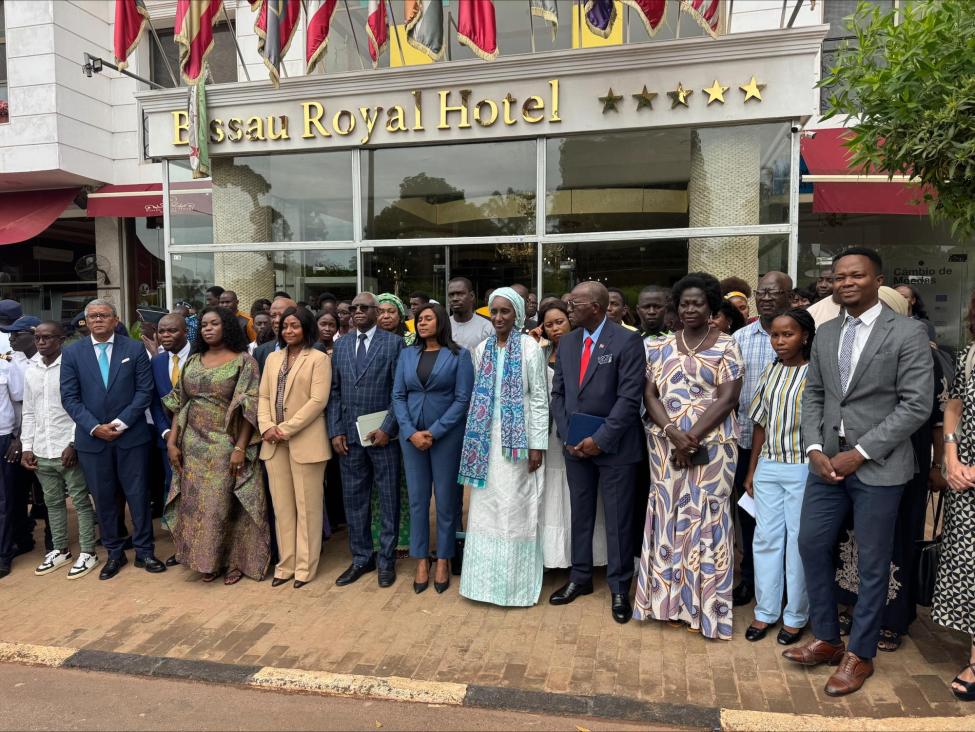
That ambition took concrete form on June 24, when the Ministry of Foreign Affairs, International Cooperation and Communities convened the Forum on Migration and Development in Bissau, alongside the International Organization for Migration and the Ministry of Youth. The gathering brought together government officials, development partners, private sector representatives, civil society groups and diaspora members to chart a more coordinated approach: one that links labor mobility, skills training and diaspora investment directly to the country’s development priorities.
“We are a nation whose history has always been shaped by the movement of people,” said H.E. Fatuma Jau, Guinea-Bissau’s Minister of Foreign Affairs, International Cooperation and Communities. “Our diaspora continues to play a vital role in sustaining households, contributing to the transfer of knowledge and serving as ambassadors of our country.”
The push comes as Guinea-Bissau works to broaden an economy still heavily reliant on agriculture, fishing and informal work, with more than half the population living below the national poverty line. Forum organizers see migration, managed well, as part of the answer: a way to build skills and capital that circulate back into the country rather than leave it for good.
Discussions centered on three areas: maximizing the development impact of migration, deepening diaspora engagement and expanding opportunities for young people through vocational training, entrepreneurship and legal labor mobility pathways.
The forum paired that dialogue with a direct investment: 21 young entrepreneurs received seed funding to launch their own businesses, turning ideas into income-generating ventures on the spot.
“This forum provides an important opportunity to exchange ideas, identify priorities and strengthen collaboration among all stakeholders to harness migration as a driver of development in Guinea-Bissau,” said Aissata Kane, IOM’s Chief of Mission in Senegal, with coordination functions in Cabo Verde, the Gambia, Guinea-Bissau and Sierra Leone.
Migration has long been part of Guinea-Bissau’s social and economic landscape. Harnessing its benefits requires sustained collaboration between government institutions, local communities, the private sector, development partners, and diaspora networks. By bringing these actors together around a common agenda, the forum helped translate dialogue into practical actions that expand opportunities for young people, strengthen human capital, and reinforce the contribution of migration to national development.
This forum was support by IOM through the Regional Migration and Development Project, funded by the Italian Agency for Development Cooperation (AICS).
***
For more information, please contact Jeremias Isaias Pais Mendes, Project Officer (Labour migration and inclusion): jmendes@iom.int.